
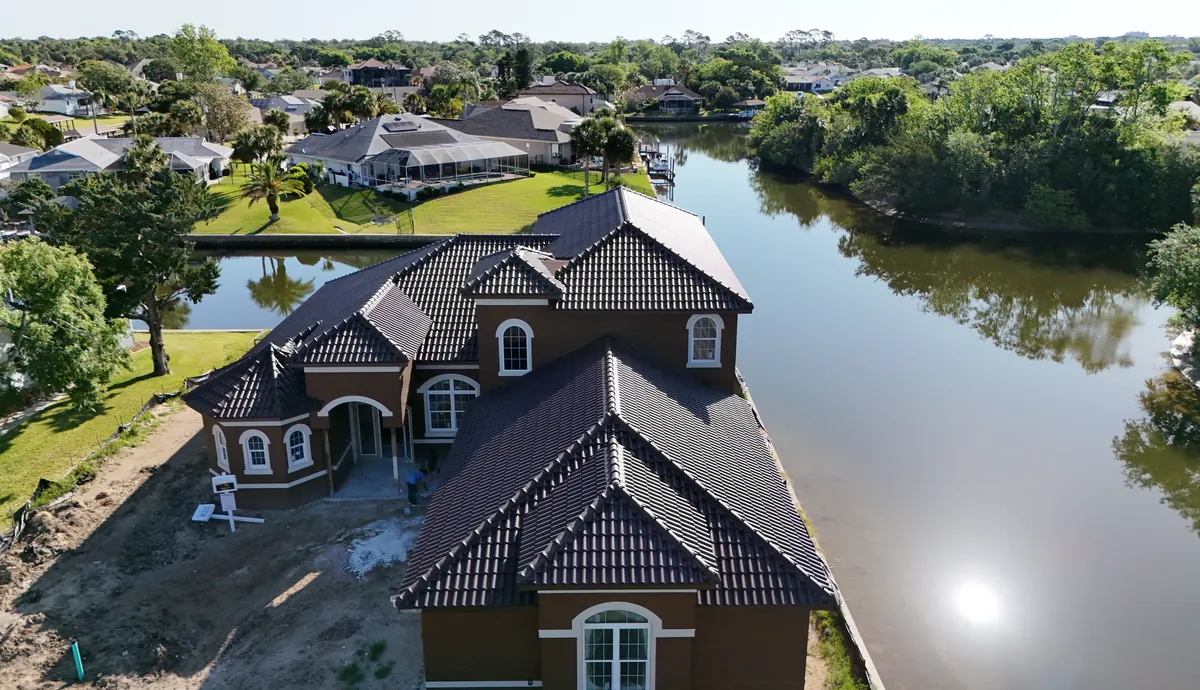
A neighbor’s roof comes off. Not in a storm, on a Tuesday, with a crew and a dumpster. The house is maybe twenty-five years old, the tile on it looked fine from the street last week, and now it is going into a truck. If you own a tile roof, or you are about to pay for one, that is the picture that makes you ask how long do tile roofs last, and whether you just watched the answer.
Here is the answer. The National Association of Home Builders’ study of home component life expectancy puts clay and concrete tile roofs at over 50 years, in the same bracket as slate and copper and the longest of any roofing material it rates. Asphalt shingles come in at about 20. Those are national figures, and the same study says in the next breath that roof life depends on local weather, proper design, material quality, and maintenance. Florida is hard on all four.
So the tile on your neighbor’s house probably was fine. What failed was underneath it. That is the thing to understand about tile roofs, and it is the reason the number in the title is only half the question.
The tile is not the part that wears out
Fired clay does not rot, rust, or lose a coating, because it has none. Our company has been making clay tile in Portugal since 1927, and the reason a tile manufacturer can operate for a century is that the product is still on the roofs it went onto. CS warrants the Plasma range against manufacturing defects for 50 years, and a warranty term is a floor, not a lifespan.
What has a lifespan is the underlayment. Under every tile roof is a membrane on the deck that does the actual waterproofing, and the tile’s job is to shed most of the water before it gets there and to protect the membrane from sun. When the membrane reaches the end of its life, the roof leaks even though every tile on it is sound. The job that follows is a lift-and-relay: the tile comes off, the underlayment is replaced, and the tile goes back on. In practice some of the tile breaks on the way up and the color may be discontinued, which is how a sound clay roof ends up in a dumpster.
The Florida Building Code requires two layers of underlayment on tile roofs between 2.5 in 12 and 4 in 12, and the FRSA/TRI installation manual that the code references requires self-adhered membranes to pass 90 days of UV exposure testing and wind uplift testing before they can be used under tile. That is the code telling you where the weak point is.
When you get a tile quote, the underlayment line is the one that sets the roof’s life. Ask what it is. Ask whether it is the product named in the tile’s Florida Product Approval or Miami-Dade Notice of Acceptance. If the roofer cannot answer, the quote is not finished.
What shortens a tile roof’s life, according to the people who make the tile
CS Clay Tile publishes an installation guide with a table of the most common installation errors and what each one does to the roof. It is written for crews, and it is more useful to a homeowner than most of what gets written about tile. The list, in plain language:
Insufficient pitch. Every tile has a minimum slope from its manufacturer, and Tecno’s is 21 degrees, about 4.5 in 12, steeper than the code minimum. Below that, water drains slowly, moss takes hold, and the tile stays wet long after the rain stops. Wet tile ages. Dry tile doesn’t.
No air gap. Tile is supposed to sit on battens with a ventilated space under it, 3 to 5 cm in the guide, with air moving from the eave to the ridge. Tile laid directly on insulation or on a bed of mortar can’t dry, and the guide names that as a cause of early deterioration and moss.
Too much mortar. Mortar at the ridges and hips is normal. Filling the ridge with it traps moisture against the tile and, in the guide’s words, strong mortars crack tile. A roof that was mortared solid looks bulletproof and is the opposite.
Wrong batten spacing. Tiles set too tight or too loose because the battens were measured wrong break during installation and during every cleaning afterward. The guide has crews lay out twelve tiles on the ground and measure before a single batten goes up.
Sealants. The guide says not to. Sealant cuts water absorption for two or three years, wears off, and while it is on it can trap condensation on the underside of the tile.
No maintenance. The guide’s own words are that a lack of maintenance is responsible for most roof problems, and that most of those would be avoided if the roof were checked before each winter.
Notice what is not on the list. The tile.
What a tile roof needs from you
Less than you’d think, and more than nothing. CS Clay Tile recommends a general inspection of the roof, the drainage, the chimney and wall transitions, and the ventilation areas twice a year, and a check of the fixings and a clearing of moss and debris once a year. Washing is water and a soft brush, working from the ridge down. Not a pressure washer at full blast, not a chemical you bought at a hardware store, and never a paint, varnish, or sealer, all of which the guide says can cause rapid and severe deterioration.
The other rule is who walks on it. Tile is strong under load spread across the roof and fragile under a boot on one edge. A roofer who knows tile walks on the low part of the barrel where the tile is supported. Anyone else, including the satellite installer and the gutter cleaner, is the most likely cause of the cracked tile you will find at the next inspection.
Insurance has its own clock
Florida Statute 627.7011 says an insurer cannot refuse to write or renew a homeowner’s policy solely because of roof age if the roof is under 15 years old. At 15, the insurer can require an inspection, and the homeowner keeps coverage if an authorized inspector finds at least five years of useful life left.
That rule is written for a 20-year material. For a roof rated at over 50 years, the 15-year inspection is early in its life, and a tile roof that was installed to its product approval, on the right underlayment, with the ventilation the manufacturer calls for, passes it the way a ten-year-old car passes an emissions test. The homeowners who get caught by the 15-year rule are, overwhelmingly, the ones with shingles.
What “over 50 years” is going to cost you
One roof. The NAHB study puts asphalt shingles at about 20 years, so over the same 50-year span a shingle house is on its third roof, with three tear-offs, three permits, and three rounds of insurance paperwork. The tile house is on its first. It may have had the underlayment done once. It still has the tile it started with, and if the tile was natural-color clay, it still has the color.
If you are deciding between materials, our comparison of clay, concrete, metal, and shingles in Florida covers the rest. If you already have tile, the best thing you can do for it this year is get someone who knows tile onto it for the inspection, and keep everyone else off.
You can request a Tecno or Plasma sample from us, or find a contractor who has installed them.
Questions people ask
How long does the underlayment under a tile roof last?
It depends on the product and the installation, and no one should give you a number without knowing both. What you can control is the choice: a self-adhered high-temperature membrane that appears in the tile’s product approval will outlast the felt used on older roofs, and it is the cheapest upgrade on the quote relative to what it buys.
Do tile roofs last longer than metal roofs?
The NAHB study rates clay and concrete tile at over 50 years and does not give metal a single figure, because metal’s life depends on the metal and its finish. Fired clay has no finish to wear through. That is the difference to look at, not the number.
Can I walk on my tile roof?
You can, but you should not unless you know where to step. Tile is fragile under a boot on one edge. Have inspections and cleaning done by someone who works on tile, and keep other trades off it.